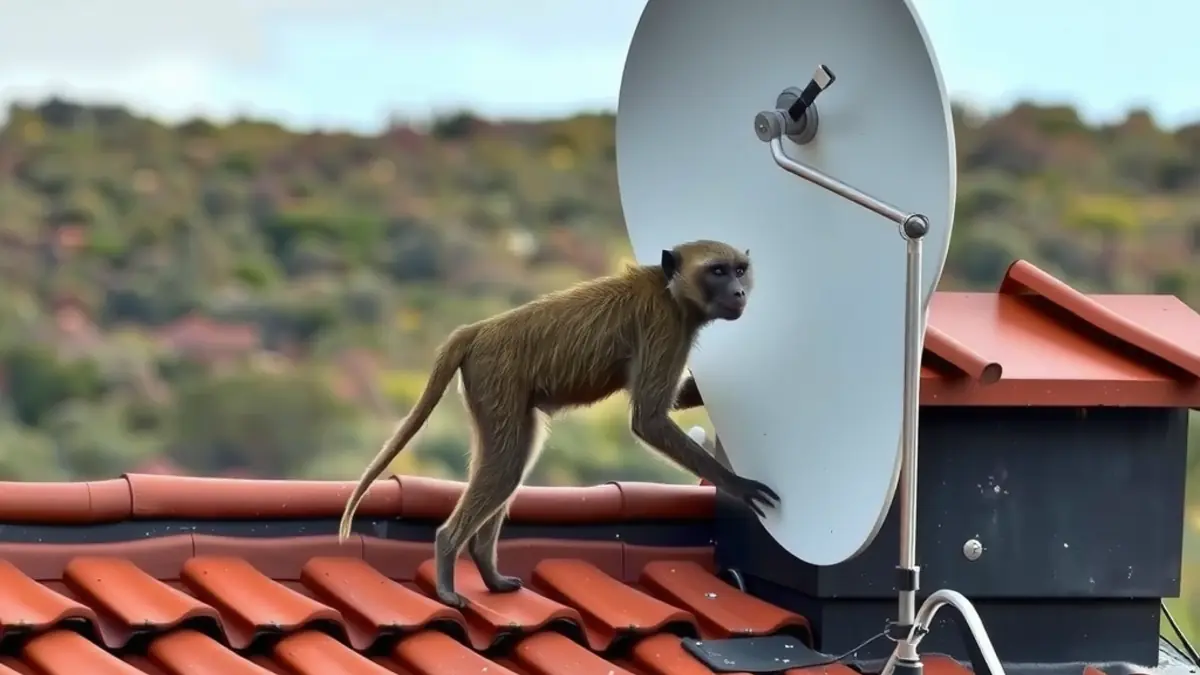
Baboons are part of life around Betty's Bay and the Kogelberg. They may cross roofs while moving through a neighbourhood, but their presence does not mean they will damage a satellite dish, aerial, camera or cable. Treat wildlife activity as a reason for sensible placement and inspection, not as proof of a fault.
If the picture fails after animals were seen on the roof, stay on the ground. Check the television message, note whether every room is affected and look for obvious changes from a safe position. Wind, corrosion, a loose connector or power interruption may be responsible instead.
What roof equipment can be exposed
Satellite dishes present a reflector, arm, LNB, bracket and cable to the outside environment. TV aerials have multiple elements and a mast. Cameras may have junction boxes and short exposed cable sections. None should rely on a loose cable loop or a fragile fastening.
Equipment should be attached to a sound building surface with the correct fixings. Cable needs clips or conduit at suitable intervals, without tension at the connector. Junctions belong in protected housings. These details also help against wind and weather, so the installation is not designed around one risk alone.
Choose a position with several risks in mind
The dish still needs clear line of sight to the satellite. Hiding it behind a chimney or vegetation simply to keep it out of sight can destroy signal. A technician must balance signal path, wind exposure, wildlife routes, salt spray, cable length and safe access.
Where two positions both provide good signal, the less exposed one may be preferable. Avoid narrow roof crossings that appear to be regular animal routes if another sound mounting surface works. Keep equipment away from gutters and edges where a displaced cable could block drainage.
Do not add harmful deterrents
Do not fit sharp wire, exposed electrical devices, poison or traps around television equipment. These can injure wildlife, residents, contractors and emergency workers. They may also create legal and fire risks.
Property owners should follow local wildlife guidance for waste, food and access control. Roof equipment is a small part of a wider baboon aware property plan. An installer can secure technical hardware, but wildlife management advice should come from the relevant local authority or qualified conservation service.
Practical installation details
- Use a rigid mast and bracket fixed to a structurally suitable surface.
- Keep cable runs neat, supported and free of dangling loops.
- Protect exterior connectors from water and salt.
- Place camera junction boxes where covers cannot be casually displaced.
- Trim vegetation only where permitted and necessary for access or line of sight.
- Record clear ground level photos after installation for later comparison.
These steps do not guarantee that equipment can never move. They reduce avoidable weaknesses and make later inspection easier.
How to inspect after roof activity
Start inside. Confirm that the decoder, router, camera recorder and television have power. Check whether the issue affects one device or the whole system. Restart equipment only according to its normal procedure, and avoid repeated factory resets because they can erase useful configuration.
Outside, compare the roof with previous photographs from the ground. Look for a dish that appears to face a different direction, a cable hanging loose, a cover on the ground or a visibly tilted aerial. Binoculars or a zoomed phone photo can help without climbing.
Call for inspection if equipment has clearly moved, a cable is detached, signal fails across all rooms, or a camera view changes suddenly. Tell the technician what you saw, but describe it as a sequence rather than a conclusion: baboons crossed the roof, then the picture failed. That leaves room to test every likely cause.
What the technician should test
A satellite inspection should check the bracket, mast, dish shape, LNB arm, connectors, cable and measured signal. Tightening one visible bolt without testing the signal can leave a marginal alignment. If a part is bent or cracked, the installer should explain whether it can be repaired or needs replacement.
For aerials, the mast and elements need inspection before retuning the television. For CCTV, check camera position, housing, junctions, recording and remote connection. For WiFi equipment mounted outside, inspect power, network cable, weather seals and alignment where directional links are used.
Make future faults easier to diagnose
Keep a small property record with installation dates, equipment models, photos and cable labels. Holiday home owners can store a copy with the caretaker. If a fault occurs while the house is empty, the owner can compare current photos and approve a repair without relying on memory.
Ask for roof equipment to be included in a pre-season check before peak holiday occupation. This is also a good time to clean up old unused cable and remove abandoned brackets that can rattle or corrode.
Cameras and wildlife
A camera can help establish when someone entered the property or when roof activity occurred, but it should respect neighbouring privacy and local rules. Aim cameras at the property area that needs protection, use secure passwords and verify that the recorder keeps footage for an appropriate period.
Remote viewing depends on power, internet service and correct network configuration. Local recording may continue during an internet outage if the recorder and cameras still have power. Ask the installer to explain exactly what works offline.
Safe response beats hurried roof work
Betty's Bay wind can change quickly, and tiles may be wet or brittle. Residents should not chase animals across roofs or attempt alignment without safe access and a signal meter. Keep people and pets inside, follow local wildlife advice, and arrange a technical inspection when conditions are safe.
If roof equipment appears to have moved, send a ground level photo and describe which services stopped working. An inspection can separate wildlife risk from wind, corrosion, cable and power faults.
Related services for Betty's Bay properties
A good plan may involve one service or several. Use these pages to match the work to the problem: new DStv installation, DStv repairs, dish alignment, Explora installation, XtraView, decoder and dish relocations, TV mounting, commercial systems, and communal systems. We can also plan Openview, CCTV, home WiFi networks, and TV aerials.
Tell the installer which rooms need a picture, where people normally use WiFi, whether the house is occupied year round, and who must be able to check the property while it is empty. That short brief prevents separate systems from being installed in ways that compete for the same cable routes, roof space or power points.
Frequently asked questions
Do baboons always damage satellite dishes?
No. Baboons may cross roofs without touching or damaging equipment. If a fault follows roof activity, inspect and test the system rather than assuming the cause.
How can I protect roof cables?
Use outdoor rated cable fixed neatly to sound surfaces, minimise exposed loops and protect junctions. The route must also remain serviceable and avoid creating water traps.
Should I climb up to check the dish?
No, especially in wind or on wet, steep or fragile roofing. Use safe ground level observations and ask a technician to inspect and measure the signal.
Can a camera confirm what happened on the roof?
A correctly placed camera may show movement in its field of view. It cannot cover every angle, and recording depends on power, storage and configuration.
What should I tell the installer after a possible incident?
Report the time, visible roof activity, error message, affected rooms and any obvious movement seen from the ground. Share before and after photos if you have them.