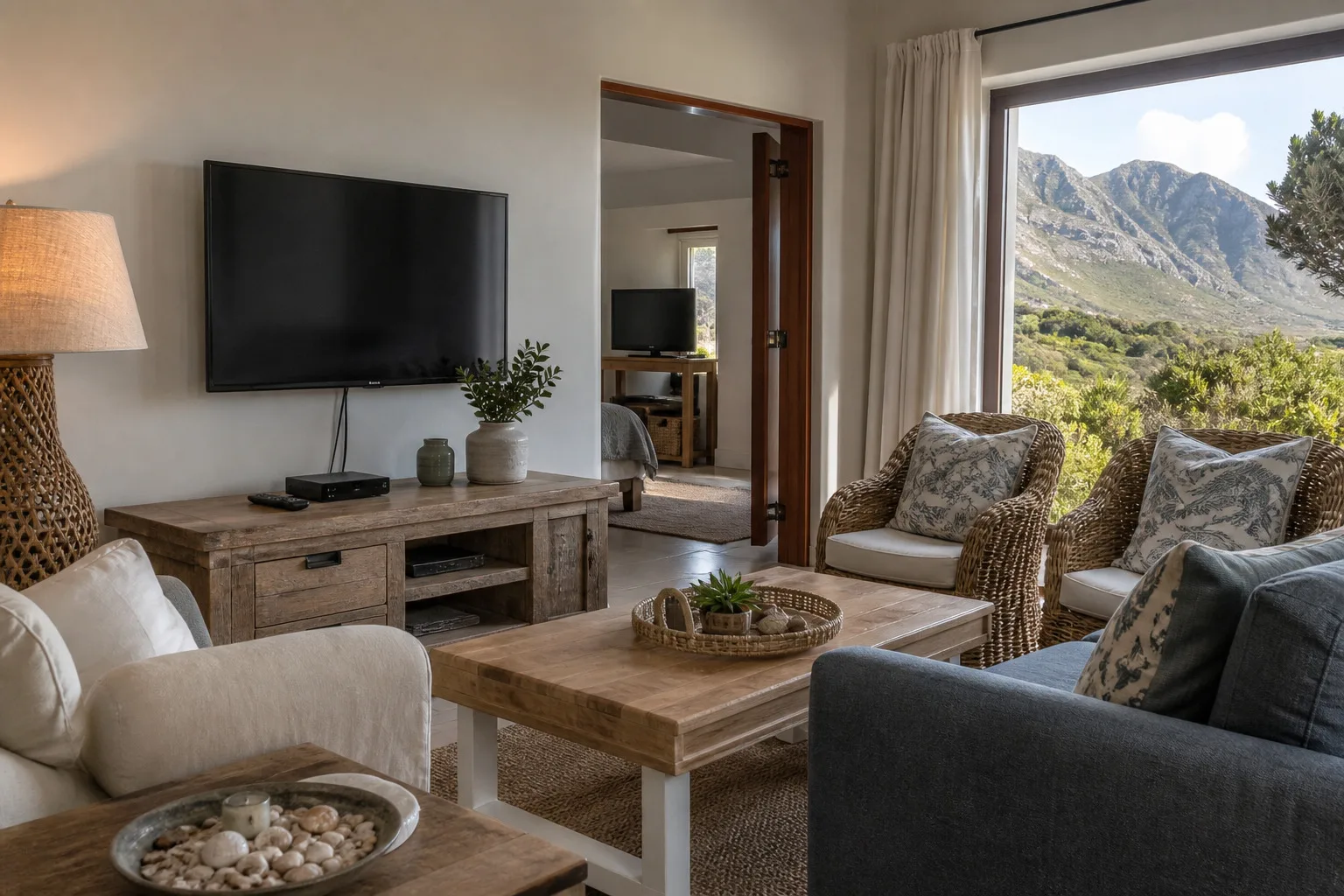
Guests judge a stay on the small things, and a television that does not work: or that forces the whole house to watch the same channel: is one of them. For Betty's Bay and Overberg-coast guesthouses, B&Bs and self-catering houses, getting multi-room DStv right is a quiet but real part of the guest experience. The good news is that it is usually simpler and cheaper than owners expect.
The problem with one decoder, many rooms
A single decoder feeding several TVs means every room is locked to the same channel. One guest wants the rugby, another wants a movie, a third wants the kids' channels: and someone is always disappointed. The instinct is to put a separate DStv subscription on every room, but that gets expensive fast and is rarely necessary.
How XtraView solves it
XtraView links one primary decoder with up to two additional decoders on a single DStv account. Each linked decoder drives its own TV and tunes to its own channel, so three areas can watch three different things at once: all on one subscription. For a small guesthouse with a few rooms, that is often the entire solution.
You also keep the full feature set on the primary box. If that is an Explora or Explora Ultra, you still get recording, catch-up and streaming, while the linked rooms get clean live viewing. We size the decoders to the property so you are not paying for more box than you need.
One thing worth knowing: every linked room still pulls from the same dish and the same signal, so the foundation matters more in a multi-room setup, not less. A single drifted dish or one corroded connector takes out every TV in the building at once. That is why we are fussy about the dish, the cable and the seals before we ever start linking decoders: the distribution is only ever as reliable as the signal feeding it.
When to step up to a communal system
XtraView is brilliant up to a point, but it tops out at three linked decoders. Once you are past a handful of rooms: a larger lodge, a block of self-catering units, an estate: the right answer is a communal system: a single shared dish feeding a proper distribution network, with each unit getting its own point. It is tidier than a dish on every roof, cheaper to maintain, and far more reliable. For multi-building or higher-end venues we usually design around a commercial installation from the start.
Designing it around your property
There is no one-size answer, so we begin with a quick site survey and a few questions:
- How many rooms or units need a TV, and which need their own independent channel?
- Where does the dish sit, and what is the cleanest, most discreet cable run to each room?
- Do you want recording and streaming in the lounge or owner's quarters specifically?
- Who manages the system day to day: and how simple does the handover need to be?
From there we run neat, durable cabling: which on this coast means salt-resistant cable and sealed connectors so the system is not failing you mid-season: and we set it up so your cleaning and front-desk staff can manage the basics without phoning a technician every time a guest unplugs something.
Layouts we install most often
Most Overberg hospitality setups fall into one of a few shapes, and knowing which one fits saves money:
- Two or three rooms: a primary Explora in the lounge or owner's quarters linked to one or two rooms with XtraView. Simple, one subscription, independent channels.
- A handful of self-catering units: usually still XtraView-based where it fits, stepping up to a shared dish once you outgrow three decoders.
- Larger lodges and unit blocks: a communal dish and distribution network, with each unit on its own point and the head-end kept in one tidy, serviceable location.
Practical tips for hosts
A few things make a real difference to how much hassle the system gives you over a season. Keep the remotes paired to the right rooms and label them: guests swap them around constantly. Put the primary decoder somewhere staff can reach it but guests cannot accidentally reset it. And have the whole system checked between busy seasons rather than waiting for a guest to find the fault; the same off-season checks that keep a holiday home ready apply just as much to a guesthouse.
Why it is worth getting right
A multi-room system that simply works, room after room, season after season, pays for itself in fewer complaints, better reviews and far fewer late-night calls about a TV that will not switch on. It is one of those investments guests never consciously notice when it is right: and never stop mentioning when it is wrong.
As DStv installers in Betty's Bay, we design multi-room systems specifically for guesthouses and self-catering properties, not just family homes.
If you run hospitality anywhere from Betty's Bay through Pringle Bay to Kleinmond and across the Overberg coast, we can design and install a system that fits your property and your budget. Tell us about your venue and we will put a plan together.